
The CO-210 denial code description from the CARC (Claim Adjustment Reason Code) standard reads “Payment adjusted because pre-certification/authorization not received in a timely fashion.”
This denial fires when the payer required prior authorization for the service and the authorization was either never submitted, submitted after the payer’s deadline, or wasn’t on file when the claim was adjudicated.
CO-210 is an authorization-timing denial — it doesn’t mean the service lacked medical necessity or that the coding was wrong. It means the payer’s pre-approval process wasn’t completed before or within the required timeframe.
The “CO” prefix (Contractual Obligation) means the provider absorbs the financial responsibility under the payer contract, making CO-210 one of the most costly preventable denial types in outpatient billing.
A 2024 AMA physician survey found that 94% of physicians report care delays from prior authorization, 78% report denials increasing over the previous five years, and 33% report patients abandoning treatment due to authorization barriers.
CO-210 denials sit at the intersection of these statistics — each one represents a service already delivered to a patient but unpaid because the administrative approval didn’t happen on time.
In this guide, we’ll be exploring:
- What specifically causes CO-210 denials
- How to resolve and appeal a CO-210 denial
- Which specialties face the highest CO-210 volume
- CO-210 vs CO-197 vs CO-50 vs other authorization codes
- Prevention strategies that stop authorization denials before they occur
What causes CO-210 denials?
CO-210 triggers map to specific breakdowns in the prior authorization workflow — each with a different owner and a different fix.
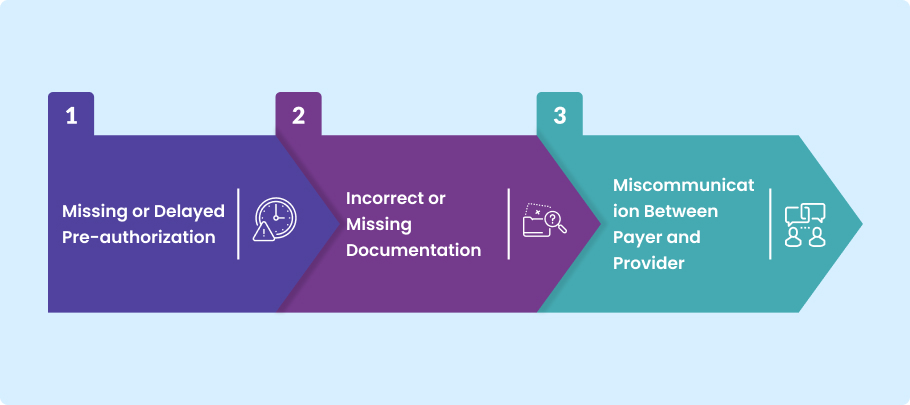
The CPT/diagnosis mismatch cause deserves particular attention because it’s the hardest to catch without systematic verification.
A surgeon obtains authorization for CPT 27447 (total knee arthroplasty), but the operative note supports CPT 27446 (medial or lateral compartment only).
The claim goes out with the actual procedure code, which doesn’t match the authorized code, and the payer denies under CO-210 — even though the authorization was obtained and the service was medically necessary.
This pattern repeats across imaging, surgery, and infusion billing wherever the final procedure differs from what was initially authorized.
How do you resolve a CO-210 denial?
Here’s how you resolve:
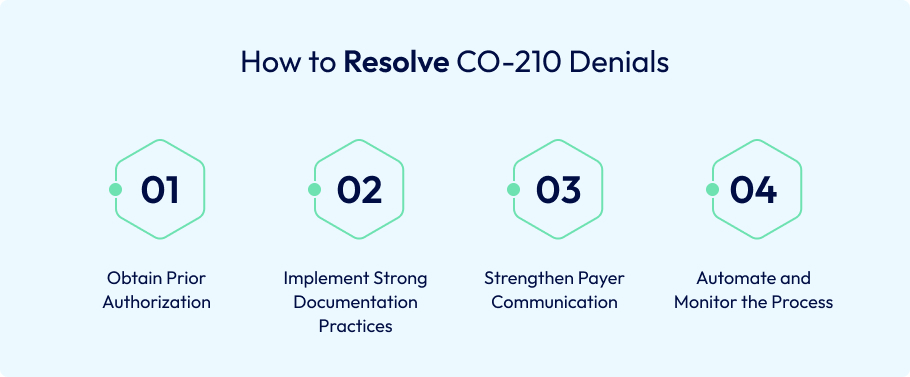
The OIG finding matters for appeals — a federal audit of Medicare Advantage prior authorization found that substantial percentages of denied services actually met Medicare coverage rules but were denied due to manual review failures or inappropriate payer interpretation.
For Medicare Advantage CO-210 denials specifically, appealing with complete clinical documentation has a meaningful overturn rate because the denial may reflect a payer processing error rather than a genuine authorization failure.
How does CO-210 differ from similar denial codes?
CO-210 is frequently confused with other authorization and coverage denial codes. The resolution strategy differs for each.
PA missing, late, or expired. Fix by obtaining/updating auth and resubmitting.
Authorization required but not obtained at all. Similar to CO-210 but some payers use CO-197 for complete absence vs CO-210 for timing failures.
Payer determined the service doesn’t meet medical necessity criteria. Different root cause than authorization timing.
Claim lacks required data for adjudication. May overlap with CO-210 when missing documentation causes auth validation to fail.
Service should be billed to a different insurer. Not authorization-related — wrong payer entirely.
A note to be made…CO-197 is not a provider credentialing code. CARC 197 officially means “precertification/authorization/notification absent.” It’s an authorization denial, not a credentialing issue. Provider credentialing problems typically produce different denial codes depending on the payer’s edit logic. The CO-210 vs CO-197 distinction is whether the authorization was late (210) or entirely absent (197), though some payers apply them inconsistently.
Which specialties face the highest CO-210 volume?
Authorization requirements concentrate in high-cost service categories, which means CO-210 denials hit certain specialties disproportionately.
| Specialty | Common Services Triggering CO-210 Denials | Why Denials Are Common |
| Radiology & Imaging | MRI scans, CT scans, PET scans | Most commercial and Medicare Advantage plans require prior authorization for advanced diagnostic imaging. |
| Orthopedic & Surgical Practices | Joint replacements, spinal surgeries, arthroscopic procedures | Elective procedures often require authorization approval before the scheduled surgery date. |
| Oncology | Chemotherapy drugs (J-codes), imaging studies, radiation therapy | High-cost cancer treatments and related services typically have strict prior authorization requirements. |
| Durable Medical Equipment (DME) Suppliers | Power wheelchairs, oxygen equipment, CPAP devices | Expensive medical equipment frequently requires payer authorization before coverage is approved. |
| Behavioral Health | Initial evaluations, psychotherapy sessions, ongoing treatment programs | Many managed care plans require authorization for both initial and continuing behavioral health services. |
The financial impact scales with procedure value. A CO-210 denial on an MRI at $500-$1,500 is costly but recoverable. A CO-210 denial on a surgical procedure at $15,000-$50,000 represents a significant revenue event that may not be recoverable if the timely filing window closes during the appeal process.
How do you prevent CO-210 denials?
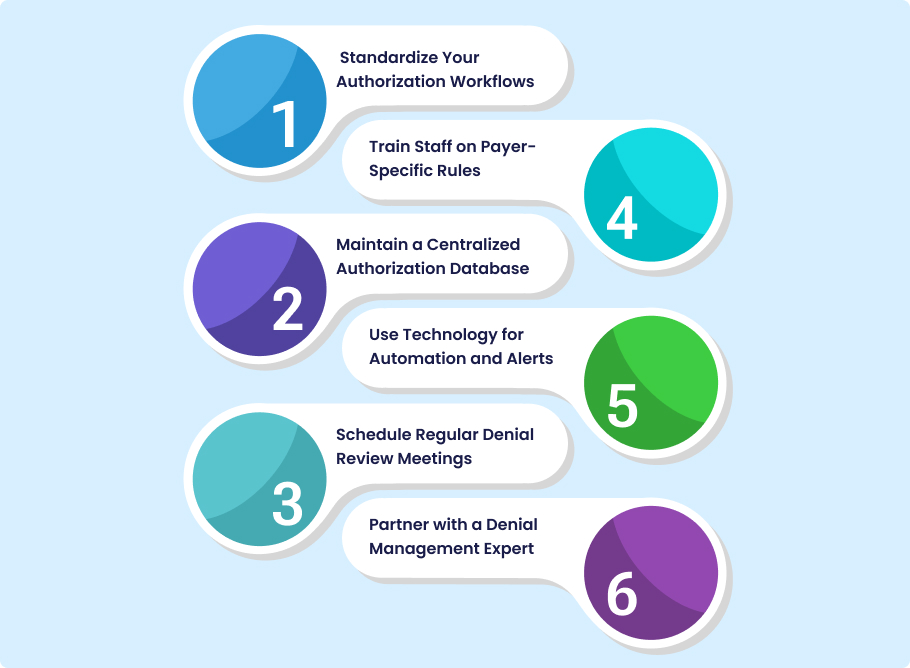
CO-210 is one of the most preventable denial codes because every root cause is verifiable before the claim is submitted — and most are verifiable before the service is even performed.
Verify PA requirements at scheduling
The authorization check should happen when the appointment is booked, not when the patient arrives. Flag every CPT code against the patient’s specific payer plan for PA requirements.
If the service requires authorization, initiate the request immediately — waiting until the week of the appointment narrows the approval window and increases the risk of late submission.
Track authorization status through service delivery
Obtaining the PA isn’t enough — the authorization must be valid on the date the service is performed, the CPT code on the claim must match the authorized code, and the authorization reference number must be linked to the claim.
Track expiration dates, approved units, and authorized procedure codes in a centralized system that the scheduling, clinical, and billing teams all access.
Verify payer rules on a rolling basis
Payer PA requirements change with plan year updates, policy bulletins, and contract amendments. A service that didn’t require authorization six months ago may require it now.
Maintaining payer-specific PA requirement sheets and updating them whenever the payer issues policy changes prevents billing against outdated rules.
Match the claim to the authorization before submission
Before every claim goes out, compare the CPT code, ICD-10 diagnosis, date of service, and provider on the claim against the authorization on file. Any mismatch — even a minor CPT variation — can invalidate the approval and produce a CO-210 denial.
CO-210 denials are preventable if you catch them upstream
Every CO-210 denial traces back to a workflow gap — the PA wasn’t requested, wasn’t requested in time, expired before the service date, or the claim didn’t match the authorization.
None of these failures are clinical judgment problems. They’re administrative process breakdowns that cost the practice revenue on services already delivered to patients.
MedHeave operates as an embedded revenue cycle department inside medical practices, with dedicated authorization specialists who verify PA requirements at scheduling, submit requests with clinical documentation, track approval status and expiration dates, and match authorization data to every claim before submission.
- Prior authorization verified and tracked for every applicable service
- Claims submitted within 24-48 hours with PA reference numbers linked
- Denials addressed within 72 hours with payer-specific appeal documentation
- Dedicated account managers with direct access (Monday-Friday, 9-5 EST)
- Performance-based pricing (4-7% of collections) with no lock-in
If CO-210 denials are eroding your collections, contact MedHeave to see how structured authorization management closes those gaps.
Frequently asked questions
Here are some commonly asked questions about CO-210 denial code:
CO-210 is a Claim Adjustment Reason Code (CARC) that means “Payment adjusted because pre-certification/authorization not received in a timely fashion.” The payer required prior authorization for the service, and the authorization was either not submitted, submitted late, expired, or not matched to the claim. The “CO” prefix indicates the provider bears the financial responsibility under the payer contract.
PR-210 carries the same CARC 210 definition — authorization not received in time — but the “PR” prefix (Patient Responsibility) shifts the financial adjustment to the patient rather than the provider. This occurs when the payer determines the patient is responsible for the service cost because authorization wasn’t obtained. Whether CO or PR applies depends on the payer contract and the specific plan terms.
Both are authorization-related denials. CO-210 specifically addresses authorization not received in a timely fashion — the timing of the submission. CO-197 means authorization was absent entirely. Some payers distinguish between the two (late vs missing), while others use them interchangeably. The resolution is similar for both — obtain the authorization (retroactively if the payer allows) and resubmit, or appeal with documentation if the authorization was actually obtained.
Yes. If the authorization was obtained but the reference number was missing from the claim, resubmit with the number attached. If the authorization was obtained but the CPT code on the claim differs from the authorized code, request an authorization update and resubmit. If no authorization was obtained, request retroactive authorization (success rates vary by payer — higher for emergent services). For Medicare Advantage denials, federal OIG data shows that a meaningful percentage of authorization denials are overturned when complete documentation is submitted.
No. CO-210 is exclusively an authorization-timing denial. Provider credentialing issues produce different denial codes depending on the payer. Some billing resources incorrectly list CO-197 as a credentialing denial — CO-197 is also an authorization code (“precertification/authorization/notification absent”), not a credentialing code. If your denial relates to provider enrollment or credentialing, look for payer-specific denial codes rather than CARC 210 or 197.
High-cost services with mandatory PA requirements generate the most CO-210 volume: diagnostic imaging (MRI, CT, PET), elective surgeries (joint replacements, spinal procedures), specialty medications (biologics, chemotherapy), DME (power wheelchairs, CPAP, oxygen), and behavioral health services under managed care plans. Medicare Advantage plans apply PA requirements more broadly than Original Medicare, making MA patients a higher CO-210 risk population.

