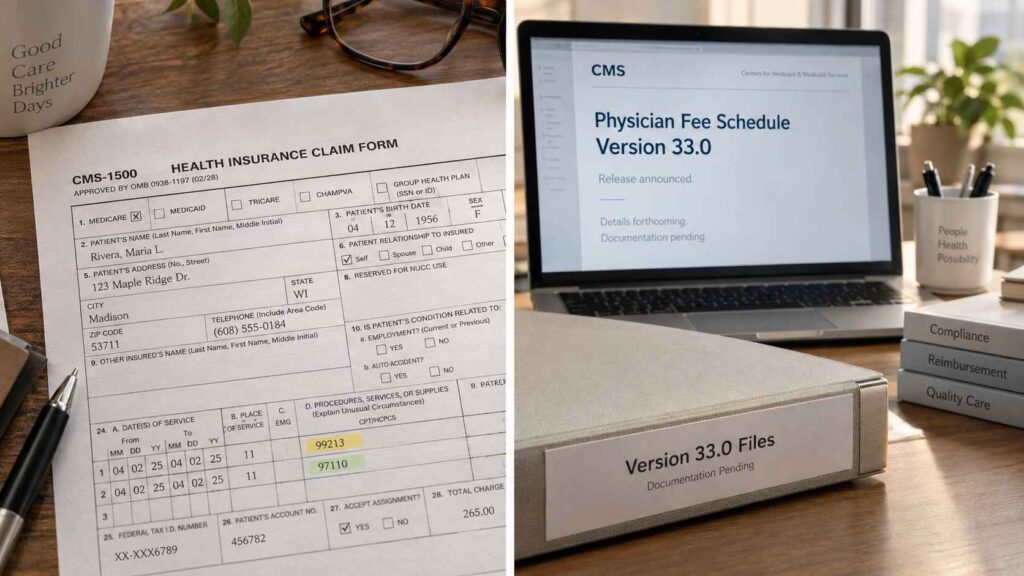
Healthcare never runs out of things to change, which is why this page keeps getting longer.
- Anna Walker
- November 2, 2026
MedHeave CEO Haroon Chaudhary will represent the company at the Abu Dhabi Future Health Summit 2026, exploring how clinical AI is transforming healthcare revenue cycle management. The event provides opportunities to discuss emerging technologies, industry challenges, and innovations that improve billing accuracy, streamline administrative workflows, and strengthen financial performance for healthcare providers navigating an increasingly technology-driven industry.
- Anna Walker
- October 19, 2026
Otter Health has launched with $8 million in seed funding to develop AI-powered clinical guideline monitoring. Its approach aims to reduce reliance on traditional prior authorization by evaluating care against established guidelines after clinical decisions. This development highlights emerging opportunities and important considerations for healthcare providers, payers, and revenue cycle management teams seeking more efficient administrative processes.
- Anna Walker
- October 19, 2026
CMS projects the weighted average monthly Medicare Advantage premium will decrease from $14.37 to $12 in 2027. Alongside plan exits and coverage changes, these developments make eligibility verification, network checks, and benefits confirmation increasingly important. Healthcare providers should prepare for potential coverage changes to minimize billing errors, prevent avoidable claim denials, and maintain accurate reimbursement workflows.
- Anna Walker
- September 29, 2026
The 2027 CPT updates introduce six new Category I codes for adaptive behavior services, revise codes 97151–97158, and delete codes 0362T and 0373T. Behavioral health providers should review documentation requirements, update billing workflows and EHR systems, and confirm payer policies. Preparing early can support accurate coding, smoother claims processing, and continued reimbursement compliance.

- Anna Walker
- September 26, 2026
A Blue Cross Blue Shield Association analysis estimates AI-related coding practices contributed to $942 million in additional inpatient costs, including $653 million associated with secondary diagnoses. The findings have drawn industry scrutiny, with the American Hospital Association disputing causal interpretations. Healthcare organizations should prioritize coding accuracy, documentation integrity, and compliance reviews while carefully evaluating the report's conclusions.
- Anna Walker
- September 26, 2026
Oracle Health is expanding AI-driven revenue cycle management capabilities, while Surescripts plans to integrate prescription prior authorization into its workflows in 2027. These developments reflect growing efforts to streamline healthcare administration. Providers should monitor implementation timelines, interoperability requirements, and CMS regulations when evaluating technologies that could improve authorization efficiency, reduce administrative burdens, and minimize treatment delays.
- Anna Walker
- September 26, 2026
CMS will continue offering a 10% bonus on qualifying professional services delivered in eligible Health Professional Shortage Areas in 2027. Providers should verify location-specific eligibility, understand modifier AQ requirements, and review quarterly payment procedures. Accurate eligibility checks and compliant billing practices can help qualifying physicians receive appropriate Medicare incentive payments while reducing avoidable reimbursement issues.
- Anna Walker
- September 23, 2026
CMS Change Request 14614 updates laboratory National Coverage Determination edits across 18 sections. Most changes take effect October 1, 2026, with system implementation scheduled for January 4, 2027. Laboratories and billing teams should review medical necessity requirements, update workflows, and prepare for potential claim denials while accounting for the specified blood count exception.
- Anna Walker
- September 23, 2026
The 2027 CPT maternity care overhaul affects 35 codes, shifting from global maternity packages toward encounter-specific coding. Obstetric practices should review documentation requirements, update billing workflows, and confirm payer guidance before implementation. Understanding the revised code structure and applicable payment policies can help reduce claim errors, improve coding accuracy, and support appropriate reimbursement throughout the transition.
- Anna Walker
- September 23, 2026
CMS National Correct Coding Initiative Procedure-to-Procedure edits version 33.0 take effect January 1, 2027, with system implementation scheduled for January 4. Updated code-pair files are expected around November 17, 2026. Billing teams should review applicable edits, prepare system updates, and verify claims workflows to strengthen coding compliance and reduce preventable denials ahead of implementation.
- Anna Walker
- September 23, 2026
CMS updated the 276/277 electronic claim-status specifications through Change Request 14429 to correct two typographical errors. The changes became effective October 1, 2026, with implementation on October 5. Healthcare organizations and billing teams should review the technical guidance and confirm system alignment. The update does not change existing Medicare coverage or payment policies.
- Anna Walker
- September 23, 2026
The FY 2027 ICD-10-CM and ICD-10-PCS code sets take effect October 1, 2026, alongside CMS Change Request 14464 updating coding for several National Coverage Determinations. Billing teams should update coding software, review revised NCD requirements, and test high-volume codes before implementation. These changes maintain existing coverage policies but require timely preparation to prevent avoidable claim rejections and denials.
- Anna Walker
- September 23, 2026